CITY OF SAN FERNANDO, La Union — Demonstrating its commitment to digital innovation and inclusive public service, the Department of Science and Technology Ilocos Region (DOST Ilocos Region) conducted the two-day training “Shaping Responsible Communicators through AI: Strategic Prompt Engineering and Ethical, Gender-Responsive Integration” on July 29–30, 2026, at the DOST Ilocos Region Multi-Purpose Hall in Catbangen, City of San Fernando, La Union.
Organized by the Regional Science and Technology Promotion Program Center (RSTPPC), led by Mr. Lemuel G. Castigo, Science Research Specialist I, in partnership with the Gender and Development (GAD) Unit, guided by GFPS Secretariat Ms. Mary Ann B. Ofiana, Project Technical Assistant I. The event brought together members of the DOST Ilocos Region Media Core, and the GAD Focal Point System (GFPS) from both regional and provincial offices. The activity aimed to equip participants with the knowledge, practical skills, and ethical understanding needed to effectively use Artificial Intelligence (AI) through strategic prompt engineering while promoting responsible, inclusive, and gender-responsive workplace communication.
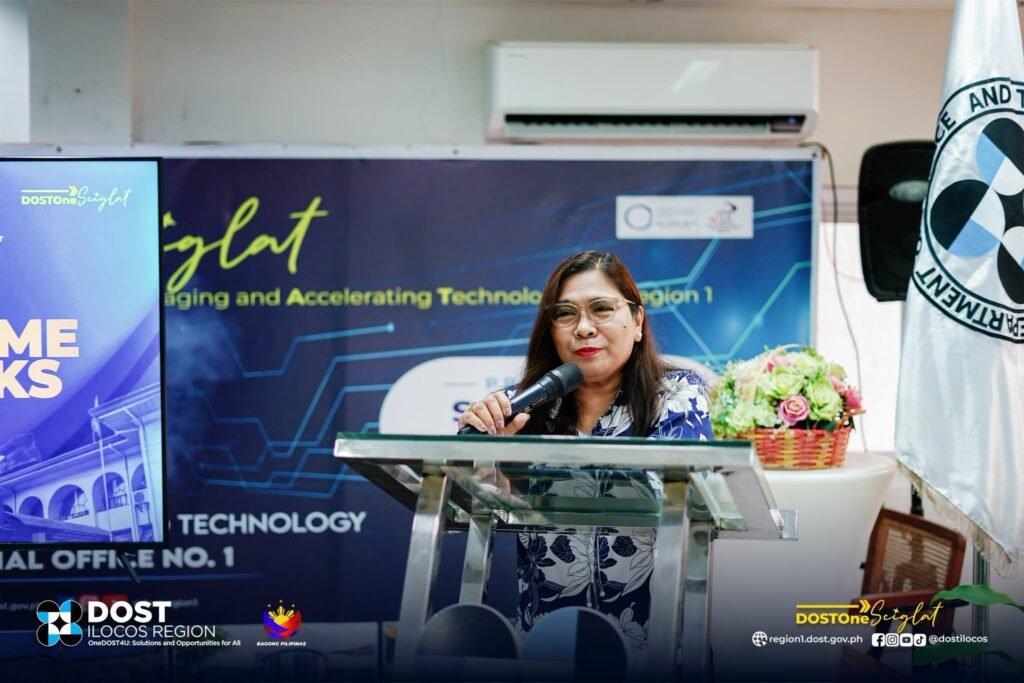
In her opening message, Regional Director Dr. Teresita A. Tabaog emphasized the important role of DOST communicators in making science, technology, and innovation (STI) more understandable, relevant, and accessible to every Filipino. The first day focused on gender-responsive communication. Ms. Nataliza L. Llapitan of the National Gender Resource Pool (NGRP) and Mariano Marcos State University (MMSU) guided participants in recognizing gender bias, using gender-fair language, and producing inclusive communication materials. She underscored that regardless of technological advancements, communicators must remain responsible for ensuring that every message reflects equality, respect, and inclusivity.
On the second day, Engr. Aunhel John M. Adoptante of the DOST – Advanced Science and Technology Institute (DOST-ASTI) introduced participants to Generative AI, prompt engineering, and responsible AI use. He demonstrated how well-crafted prompts can help generate high-quality drafts for press releases, feature stories, captions, and other communication materials while emphasizing that human judgment remains essential in verifying facts, protecting data privacy, minimizing AI bias, and maintaining institutional credibility.
Participants then applied their learnings through a hands-on workshop where they enhanced existing DOST Ilocos Region IEC and promotional materials using AI tools and gender-responsive communication principles. The workshop showcased how AI can improve efficiency in content development while ensuring that messages remain accurate, inclusive, audience-centered, and aligned with the agency’s values.
To conclude the two-day activity, Assistant Regional Director (ARD) for Technical Operations Services Ms. Racquel M. Espiritu and ARD for Field Operations Services Mr. Decth-1180 P. Libunao led the awarding of certificates to the resource speakers and participants. In her closing message, ARD Espiritu commended the workforce for taking proactive steps toward digital transformation and reminded everyone that ethical integrity and gender sensitivity must always remain at the core of science communication.
By integrating AI literacy with ethical and gender-responsive communication, DOST Ilocos Region continues to strengthen the capabilities of its communicators in delivering timely, credible, and inclusive science stories. The initiative reinforces that AI is not a replacement for human communicators but a powerful tool that, when used responsibly, enables more effective science communication and supports the agency’s continuing digital transformation and people-centered public service.