MANILA, Philippines — In a move toward sustainable transport and heritage tourism, the Department of Science and Technology (DOST), in partnership with the Intramuros Administration (IA), officially unveiled the country’s first Filipino-engineered all-electric tourist transport vehicle, or “e-tranvia,” on March 19 in Intramuros, Manila.
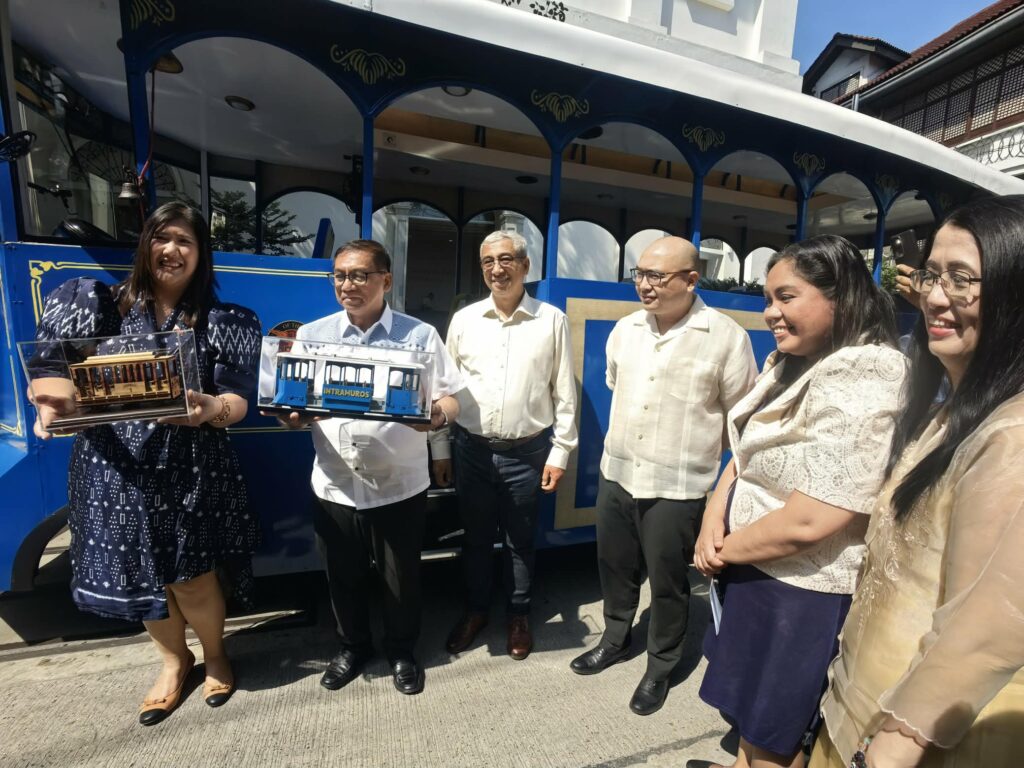
The 18-seater, low-speed, battery-electric vehicle is designed to navigate the historic streets of the Walled City, blending modern innovation with cultural preservation.
Developed through a collaboration among DOST-National Capital Region (NCR), the DOST-Industrial Technology Development Institute (ITDI), the University of the Philippines Diliman (UPD), and Cagayan State University (CSU), the e-tranvia highlights Filipino ingenuity in sustainable mobility solutions.
Intramuros Administrator Atty. Joan M. Padilla emphasized the importance of partnerships between government and academe in delivering people-centered innovations.
“This collaboration reflects the strength of partnerships between the government and the academe in delivering practical and people-centered solutions,” Padilla said, expressing hope that the project would inspire further efforts toward greener mobility and smarter tourism systems.
Designed to echo the tranvias that once operated in Intramuros in the late 19th century, the vehicle complements the historic atmosphere of the area while offering an environmentally friendly alternative to traditional diesel-powered transport.
CSU led the conceptualization and structural development of the e-tranvia, including the vehicle frame, suspension system, and body paneling. The body and roofing panels utilize abaca fiber composite material, an innovation developed by DOST-ITDI.
Meanwhile, UPD handled the electrical and electronic systems, equipping the vehicle with a lithium-ion battery, electric motor, controller, and charging infrastructure—effectively eliminating reliance on fossil fuels.
Science and Technology Secretary Renato U. Solidum Jr. underscored the role of such innovations in addressing rising fuel costs and supply concerns, while promoting accessible electric mobility across the country.
He also highlighted the importance of strengthening research and development in e-mobility, expanding charging infrastructure, and sustaining partnerships with higher education institutions.
At present, Intramuros has deployed one e-tranvia unit, with three additional units expected to arrive soon. Additional units are also planned for deployment in South Cotabato, Cagayan province, and Malacañang Palace, according to CSU President Dr. Arthur G. Ibañez.
The initial material cost of each unit is estimated at ₱2.5 million. DOST-NCR Regional Director Engr. Romelen T. Tresvalles said efforts are underway to secure private sector partnerships to support large-scale production.
“By reimagining a symbol of our history through Philippine engineering and sustainable technology, we are breathing new life into the walled city,” Tresvalles said.
The e-tranvia is currently available to the public free of charge through a rolling tour within Intramuros. The route includes key heritage sites such as Fort Santiago, Museo de Intramuros, Baluarte de San Diego, Foro de Intramuros, Centro de Turismo, nearby schools, and the Pasig Esplanade.(Nelson Santos)