TANGCAL, Lanao del Norte — For learners in communities where distance, resources, and circumstances can sometimes limit access to opportunities, bringing technology closer can also mean bringing possibilities closer.
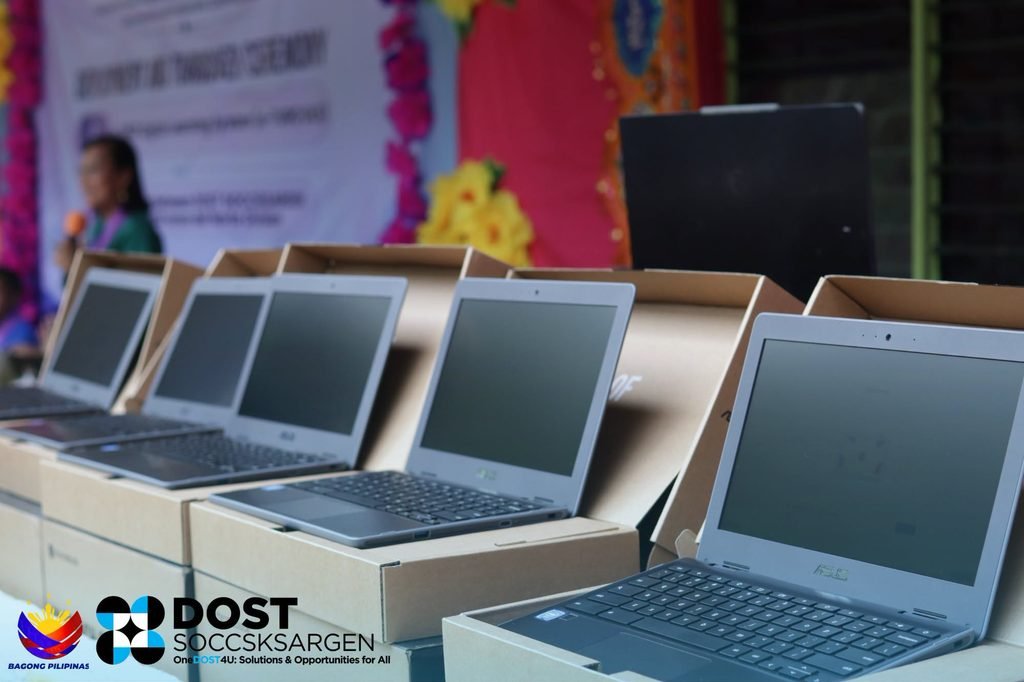
This vision took a concrete step forward as the Department of Science and Technology (DOST) SOCCSKSARGEN led by Regional Director Engr. Sammy P. Malawan, PhD, in partnership with the Department of Education (DepEd) – Schools Division of Lanao del Norte, formally signed a Memorandum of Agreement (MOA) and deployed the 𝗲-𝗧𝗨𝗥𝗢 𝗗𝗶𝗴𝗶𝘁𝗮𝗹 𝗟𝗲𝗮𝗿𝗻𝗶𝗻𝗴 𝗦𝘆𝘀𝘁𝗲𝗺 (𝗲-𝗧𝗨𝗥𝗢 𝗗𝗟𝗦) at Berwar Integrated School, Camp Bilal, Barangay Berwar, Tangcal, Lanao del Norte.
Through the guidance of the entire DOST System headed by Secretary Dr. Renato U. Solidum Jr., and through DOST Undersecretary for Regional Operations, Engr. Sancho A. Mabborang, the initiative forms part of the Science for Peace Program: Science and Technology Solutions for Peaceful and Productive Communities, implemented by DOST SOCCSKSARGEN in collaboration with the Office of the Presidential Adviser on Peace, Reconciliation and Unity (OPAPRU) under the foresight of Secretary Atty. MEL SENEN SARMIENTO, and complemented by the Community Empowerment thru Science & Technology (CEST) Program.
At the heart of the initiative is a simple but far-reaching vision: to make science, technology, and learning opportunities more accessible to communities — and, through them, create greater room for people to learn, participate, and shape their own futures.
Developed by RYR Innovations, e-TURO DLS is designed to support education through digital learning resources, AI-assisted content generation, automated assessment functions, and learning management features that may complement existing curriculum requirements and teaching and learning strategies.
For DOST SOCCSKSARGEN, however, the significance of e-TURO goes beyond the technology itself.
It directly speaks to the agency’s Pillar of Well-being — recognizing that well-being also means having opportunities to learn, participate, and imagine a better future. “𝗠𝗮𝘀 𝗺𝗮𝗹𝗮𝗽𝗶𝘁 𝗮𝗻𝗴 𝘁𝗲𝗰𝗵𝗻𝗼𝗹𝗼𝗴𝘆, 𝗺𝗮𝘀 𝗺𝗮𝗹𝗮𝗽𝗶𝘁 𝗮𝗻𝗴 𝗼𝗽𝗽𝗼𝗿𝘁𝘂𝗻𝗶𝘁𝘆,” says RD Malawan.
The deployment in Berwar puts this principle into practice by bringing digital learning resources closer to teachers and learners who will experience the system firsthand in their classrooms. Rather than viewing technology as an end in itself, the initiative places it in the hands of teachers and learners who can give it purpose — using it to make lessons more accessible, provide learners with another way to understand, and help teachers integrate technology into their teaching practice.
The deployment also carries a deeper significance as an intervention under the Science for Peace Program. Here, science and technology are positioned not only as tools for innovation, but as instruments that can contribute to peacebuilding, participation, and community development. The program’s “Agham na Ramdam” vision comes alive when science reaches places where people can actually experience its benefits — in the classroom, in the hands of teachers and learners, and within the wider community.
When knowledge becomes more accessible and learning opportunities become more attainable, science becomes something communities can feel, use, and build upon.
In this sense, e-TURO serves as a bridge: between learners and opportunity, between communities and possibilities, and between where people are now and where they aspire to be.
The MOA formalizes the pilot implementation of e-TURO DLS at Berwar Integrated School for 2026–2027, covering selected Grade 6 classes with approximately 80 learners and selected BIS teachers. The pilot will include deployment and operationalization of the system, provision of necessary hardware, software and connectivity support, teacher and school personnel training, technical assistance, monitoring, and baseline and endline assessments. Importantly, the pilot is designed not only to introduce the technology but also to generate evidence on its usability, effectiveness, cost-efficiency, scalability, and potential applicability in other educational settings.
This makes Berwar more than a recipient of a digital learning system. It becomes a learning ground for understanding how science and technology can respond to the realities of geographically isolated, conflict-affected, and underserved communities. The lessons gathered here may help inform future education and technology interventions and guide how similar opportunities can be brought closer to other communities.
The ceremonial turnover was accompanied by the signing of the MOA between DOST SOCCSKSARGEN, and DepEd – Division of Lanao del Norte, represented by Schools Division Superintendent Dr. Edwin R. Maribojoc, CESO V represented by Ms. Rowena Lontayao, SDO Lanao Del Norte Education Program Supervisor in Science. The partnership also brings together the Municipality of Tangcal, community and peace partners from Camp Bilal and the JTFCT-MILF, Berwar Integrated School, RYR Innovations, and other stakeholders.
During the program, DOST SOCCSKSARGEN emphasized that the initiative is intended to grow beyond the ceremony and into the everyday experiences of the school community. The e-TURO DLS was formally turned over to Berwar Integrated School as the identified pilot school, marking the transition from installation and training to actual classroom implementation.
From here, its impact will ultimately be measured not by the presence of a digital system, but by what it enables — a lesson made more accessible, a teacher better equipped, a learner given another avenue to understand, and a community given another opportunity to move forward.
For DOST SOCCSKSARGEN, the e-TURO deployment reflects a broader commitment: science and technology must reach people where they are and respond to the realities they face. As the pilot begins in Berwar, the hope is that e-TURO will become more than a digital learning resource. It can become a bridge to learning, participation, opportunity, and possibility — helping demonstrate how science and technology can contribute not only to better learning, but to stronger and more empowered communities.
Because when science reaches the people, and people are given the tools to help shape their own future, that is 𝗔𝗴𝗵𝗮𝗺 𝗻𝗮 𝗥𝗮𝗺𝗱𝗮𝗺. 𝗠𝗮𝘀 𝗺𝗮𝗹𝗮𝗽𝗶𝘁 𝗮𝗻𝗴 𝘁𝗲𝗸𝗻𝗼𝗹𝗼𝗵𝗶𝘆𝗮. 𝗠𝗮𝘀 𝗺𝗮𝗹𝗮𝗽𝗶𝘁 𝗮𝗻𝗴 𝗽𝗮𝗴𝗸𝗮𝘁𝘂𝘁𝗼. 𝗠𝗮𝘀 𝗺𝗮𝗹𝗮𝗽𝗶𝘁 𝗮𝗻𝗴 𝗼𝗽𝗼𝗿𝘁𝘂𝗻𝗶𝗱𝗮𝗱. 𝑨𝒏𝒅 𝒇𝒓𝒐𝒎 𝑩𝒆𝒓𝒘𝒂𝒓, 𝒂 𝒃𝒊𝒈𝒈𝒆𝒓 𝒗𝒊𝒔𝒊𝒐𝒏 𝒃𝒆𝒈𝒊𝒏𝒔.