


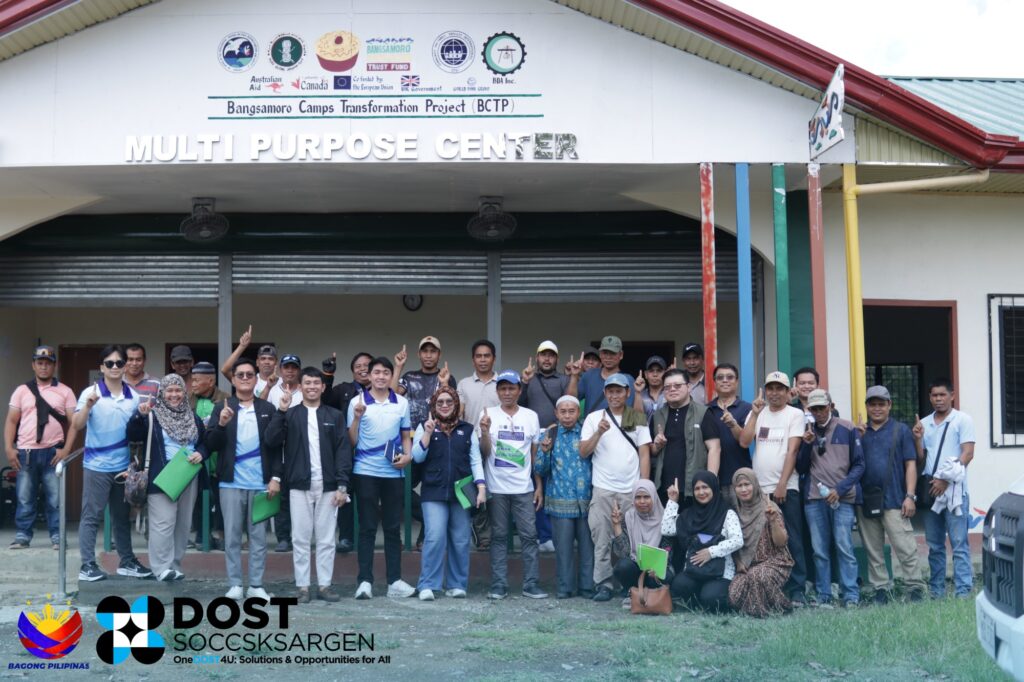
On April 27 to May 4, 2026, the Department of Science and Technology SOCCSKSARGEN through the direction of Regional Director Engr. Sammy P. Malawan and under the guidance of the DOST Office of the Undersecretary for Regional Operations and in close coordination with the Office of the Presidential Adviser on Peace, Reconciliation and Unity (OPAPRU), conducted a Camp Visitation, Monitoring, and Comprehensive Assessment across identified priority communities in Mindanao under the implementation of the 𝗦𝗖𝗜𝗘𝗡𝗖𝗘 𝗙𝗢𝗥 𝗣𝗘𝗔𝗖𝗘 𝗣𝗥𝗢𝗚𝗥𝗔𝗠: 𝗦𝗰𝗶𝗲𝗻𝗰𝗲 𝗮𝗻𝗱 𝗧𝗲𝗰𝗵𝗻𝗼𝗹𝗼𝗴𝘆 𝗦𝗼𝗹𝘂𝘁𝗶𝗼𝗻𝘀 𝗳𝗼𝗿 𝗣𝗲𝗮𝗰𝗲𝗳𝘂𝗹 𝗮𝗻𝗱 𝗣𝗿𝗼𝗱𝘂𝗰𝘁𝗶𝘃𝗲 𝗖𝗼𝗺𝗺𝘂𝗻𝗶𝘁𝗶𝗲𝘀.
The undertaking forms part of the government’s continuing commitment to the Normalization Track of the Comprehensive Agreement on the Bangsamoro (CAB), particularly on the transformation of former conflict-affected communities into empowered, self-sustaining, and development-ready areas through responsive and inclusive interventions.
In the week-long activity, DOST SOCCSKSARGEN’s Project Management Team (PMT) visited the following acknowledged camps, particularly; Camp Bader in Brgy. Datalpandan, Guindulungan, Maguindanao del Sur, Camp Abubakar in Brgy. Sapad, Matanog, Maguindanao del Norte, Camp Omar in Brgy. Saniag, Ampatuan, Maguindanao del Sur, Camp Rajahmuda in Brgy. Daladagan, Mangudadatu, Maguindanao del Sur, Camp Bushra in Brgy. Sandab Madaya, Butig, Lanao del Sur and Camp Bilal in
Brgy. Biruar, Tangcal, Lanao del Norte.
The field activity was carried out in close coordination with the respective Local Government Units (LGUs), the Joint Task Forces on Camps Transformation (JTFCT), local peace mechanisms, community leaders, and beneficiary groups to ensure that the assessment process remained participatory, culturally sensitive, and grounded on the actual conditions of the communities.
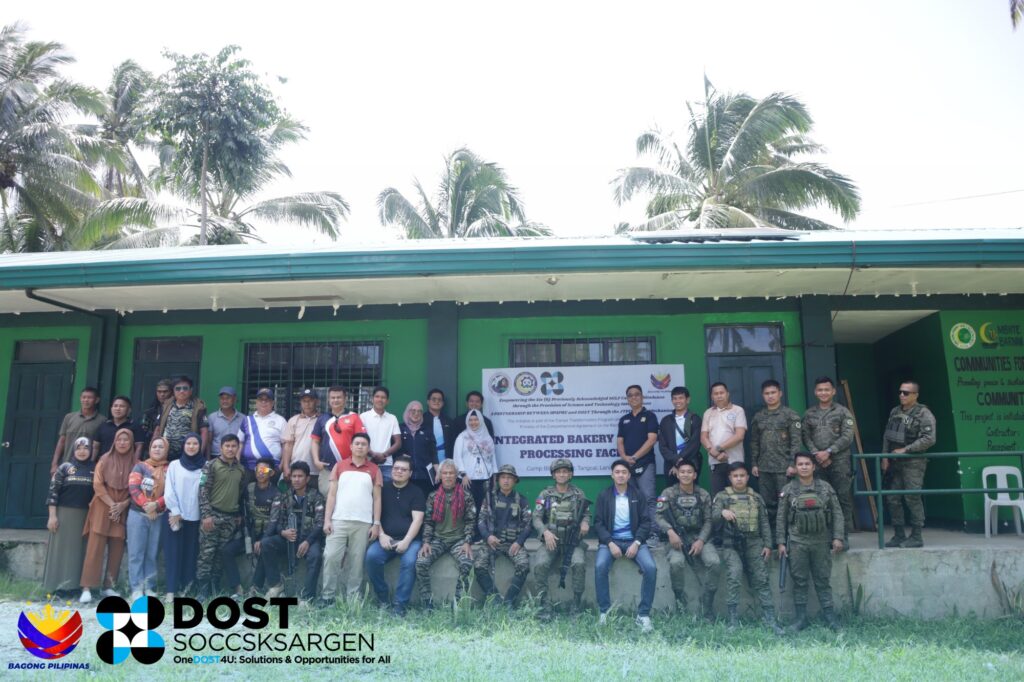
More than a routine inspection, the activity served as a strategic groundwork for identifying science and technology interventions that are responsive to the needs, capacities, and aspirations of the people. Through direct community immersion and on-site validation, the PMT assessed the viability and readiness of each area for possible deployment of livelihood, agricultural, infrastructure, digital, and enterprise-based technologies intended to improve productivity and strengthen local economies.
The assessment covered key areas such as infrastructure and utilities, agricultural and livelihood potentials, enterprise readiness, technology utilization, and solar installation viability. Potential interventions on food processing, Halal goat and ZamPen Native Chicken production, crop and aquaculture systems, STARBOOKS, dressmaking, handloom weaving, and other community-based technologies were likewise evaluated for possible enhancement and expansion.
The monitoring activity also enabled the PMT to validate existing interventions, identify operational and technical gaps, and determine the necessary support mechanisms to strengthen implementation. Consultations with beneficiaries and local stakeholders further provided valuable insights on community conditions, livelihood challenges, and development priorities.
In communities where years of conflict once limited opportunities and access to services, the Science for Peace Program continues to serve as a concrete platform for inclusive and peace-responsive development. Through the program, DOST reinforces its commitment to bringing science, technology, and innovation closer to historically underserved communities – transforming technology into a bridge toward resilience, productivity, and lasting peace.
Moving forward, DOST SOCCSKSARGEN remains steadfast in strengthening partnerships with OPAPRU, local government units, and peacebuilding stakeholders to sustain interventions that are community-centered, culturally responsive, and anchored on long-term development outcomes. Through continued convergence and meaningful engagement, the agency reaffirms its commitment to ensuring that no community is left behind in the pursuit of peace, progress, and sustainable development in Mindanao.